Iceland in 29 stories.
Eleven hundred years, told the way a local would over a beer: a parliament on a lava plain, a country that banned beer but not vodka, a chess match that was really a war, and the day the women stopped. 29 stories built from The Reykjavík Grapevine's history writing, every date checked, and each one ends somewhere you can actually go.
Two national drinks 2
The Beer Ban
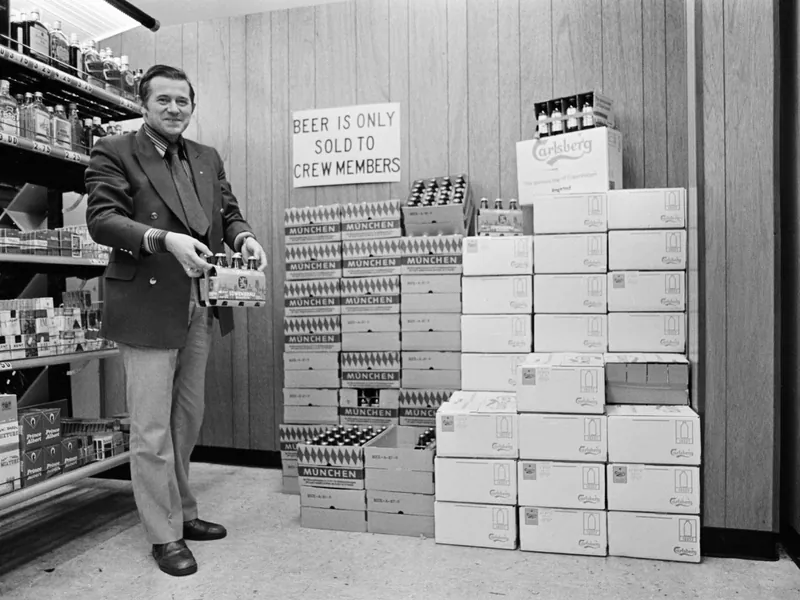
Icelanders voted to ban all alcohol in 1908 and the ban arrived in 1915. It lasted seven years before Spain pointed out that a country unwilling to buy Spanish wine could sell its fish elsewhere. Wine came back in 1922 and spirits in 1935, but beer stayed banned: the temperance movement gave up everything else to keep it, arguing that anything so mild and cheap would ruin workers and teenagers. So for 54 years you could buy vodka but not lager. The British army got a brew of its own in 1940, Polar Ale, made by Ölgerðin. Aircrew could carry cans home from 1965 and everyone else from 1979, while the pubs poured bjórlíki, pilsner spiked with vodka, until that was banned as well in 1985. On 1 March 1989 the taps opened. Ölgerðin's new lager went on sale in the state shops that day, in 33 cl cans, six at a time: Egils Gull, on the shelf ever since. 1 March is still Beer Day.
Brennivín
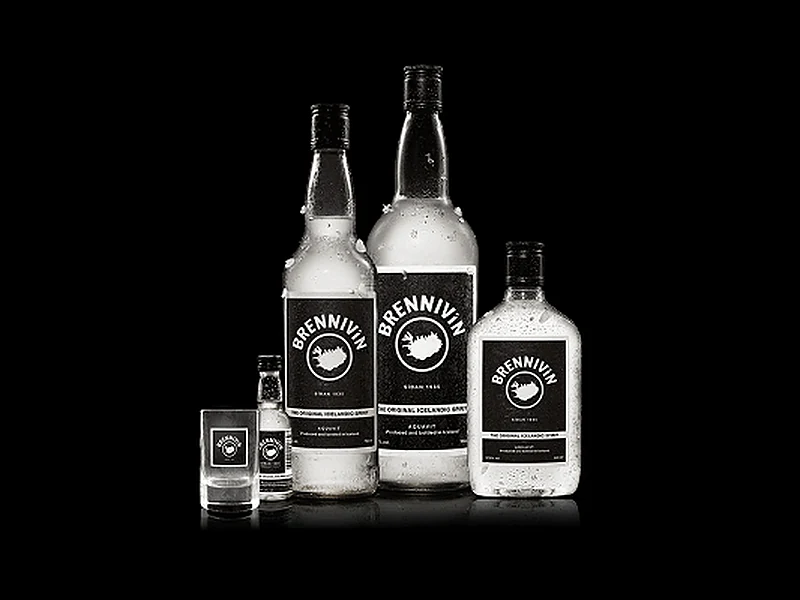
No Viking ever drank Brennivín. When the Grapevine asked historian Stefán Pálsson where the national schnapps came from, the answer was a committee. Prohibition began in 1915 and taught the whole country to distil at home, so when spirits became legal again in 1935 the state liquor monopoly needed something cheap enough to beat moonshine. It came up with “fire wine”: a clear spirit flavoured with caraway and priced to win. It won, and then the price became the problem. Brennivín turned into the drunkard's drink and picked up a nickname, Svarti dauði, the Black Death. An advertising agency was eventually called in to rescue the green bottle with the black label, and it worked, mostly on visitors. Icelanders keep it for Þorrablót, where an ice-cold shot is the accepted way past the fermented shark. Serve it straight from the freezer. The caraway does the rest.
Settlement and sagas 5
Ingólfur and the Pillars
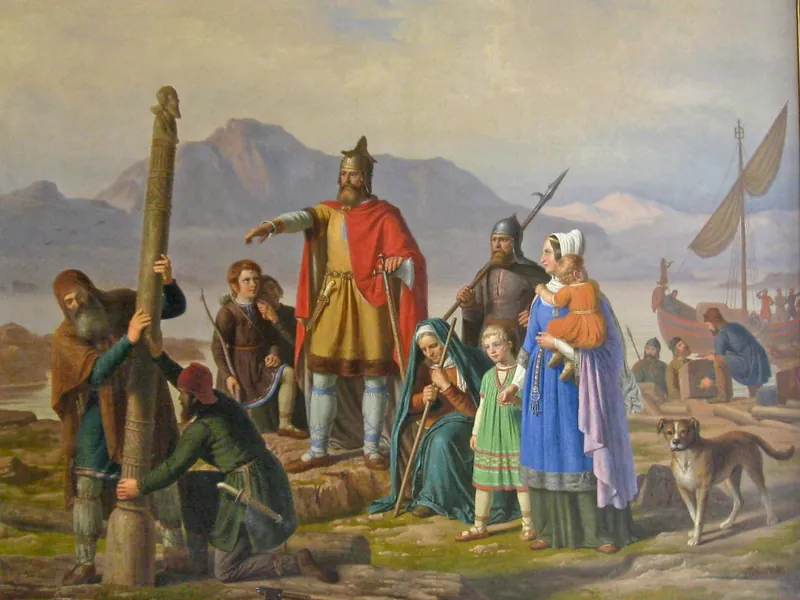
Around 874, by the traditional count, Ingólfur Arnarson sighted Iceland, threw the pillars of his high seat overboard and vowed to settle wherever the gods washed them up. He spent a few winters at the cape south of Vatnajökull still called Ingólfshöfði while his slaves searched the shoreline, a game of fetch that lasted three years. The pillars had landed in a bay steaming with hot springs: Reykjavík, Smoky Bay. His men complained that they had passed greener land to get there. His blood brother Hjörleifur fared worse, killed by his own slaves at Hjörleifshöfði, where a burial mound is still pointed out on top. Some scholars now read the whole tale as literature, Romulus and Remus with worse weather. Either way, a turf wall dated to 871, give or take two years, lies under Aðalstræti in the Settlement Exhibition, and Ingólfur's statue has topped Arnarhóll since 1924. Reykjavík's children use his hill for sledging.
The Parliament on the Plains
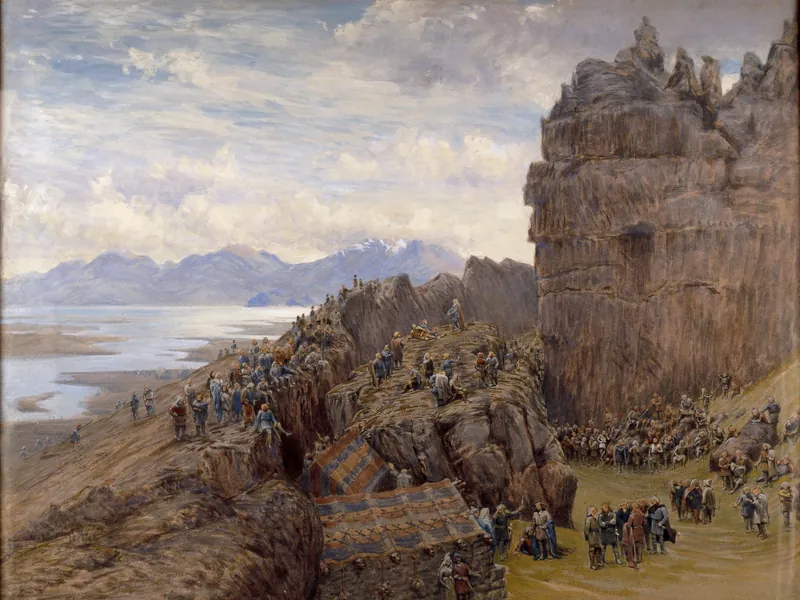
Around 930 Iceland's chieftains agreed to meet for two weeks every summer on a plain by the river Öxará, and called it the Alþingi. There was no king and one paid official. The lawspeaker, chosen for three years, had to know the law by heart and recite all of it, in instalments, from Lögberg, the Law Rock. At the assembly he was the most powerful man in the country; the rest of the year he had no power at all. Anyone present could climb the rock and have their say. The Grapevine calls it the world's oldest parliament and does not skip the later chapters: 65 known executions, and a drowning pool where visitors take selfies. The assembly met here until 1798. The rock fell out of use after 1262 and nobody is sure where it was. A flagpole marks one candidate; the other is inside Almannagjá, the gorge at the edge of the North American plate.
A Day Under the Fur
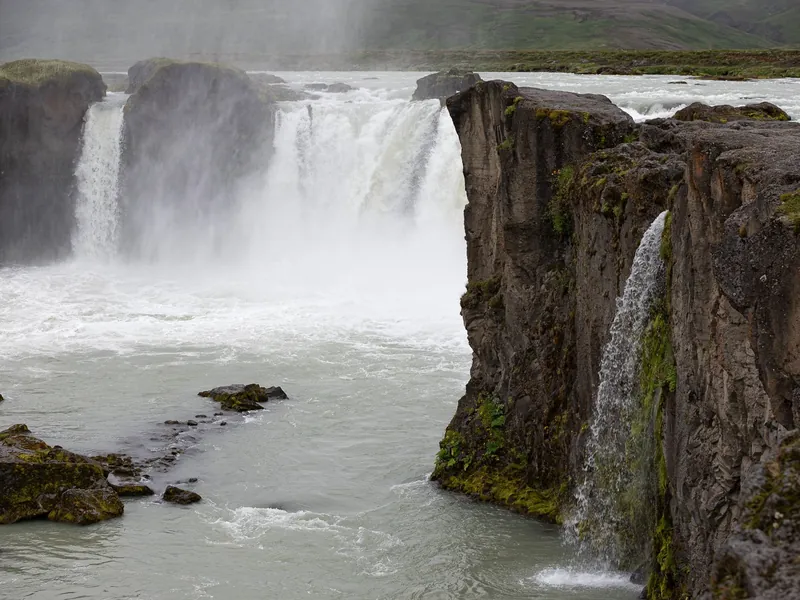
By the summer of 1000 the Alþingi had split in two, pagans and Christians, each with its own lawspeaker and neither recognising the other's laws. Norway's king, Ólafur Tryggvason, was holding chieftains' sons hostage to hurry things along. Rather than fight, both sides handed the decision to one man, the pagan lawspeaker Þorgeir Ljósvetningagoði, who lay under a fur for a day and a night to think. Then he walked to the Law Rock and declared Iceland Christian, with small print: people could go on eating horse meat, exposing unwanted infants, and worshipping the old gods so long as they did it in private. In Norway, the Grapevine notes, holdouts tended to be massacred. Legend adds that Þorgeir went home and threw his idols into the waterfall on his land: Goðafoss, waterfall of the gods, between Akureyri and Mývatn, protected since 2020. Iceland changed religion the way it still prefers to change things, by arbitration, with exemptions.
Found America, Lost It Again
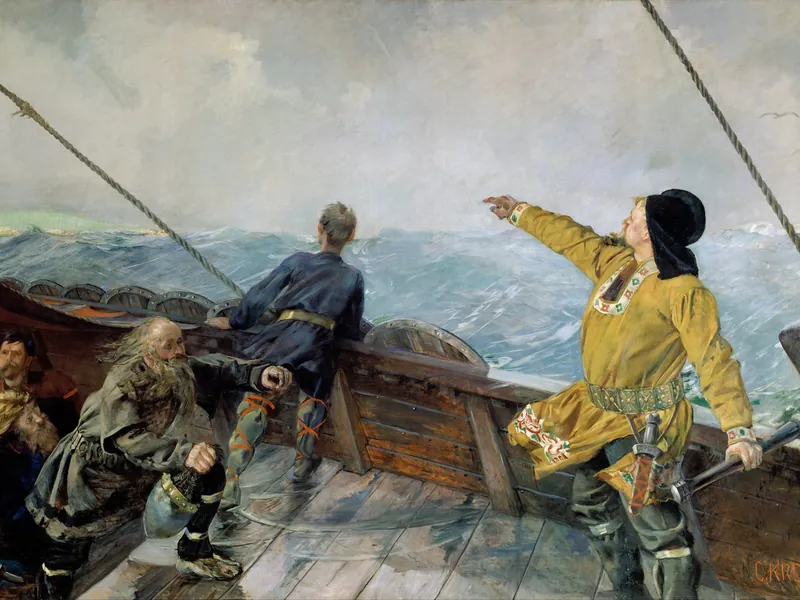
Around 1000 Leifur Eiríksson, born in Iceland and raised partly in Greenland, reached a coast he named Vínland, and never went back. The follow-up fell to Guðríður Þorbjarnardóttir, born at Laugarbrekka on Snæfellsnes. She lost one husband to plague in Greenland, sailed west with the next, Þorfinnur Karlsefni, and in Vínland gave birth to Snorri, the first European recorded as born in the Americas. After three years of trading and fighting with the people who already lived there, the settlers went home. Guðríður farmed at Glaumbær in Skagafjörður, later travelled to Rome, and ended her days as a nun. Timber from Norse houses in Newfoundland has since been dated to exactly 1021. The Grapevine's verdict, via a line attributed to Oscar Wilde: Icelanders found America and had the good sense to lose it again. Leifur stands outside Hallgrímskirkja, a gift from the United States in 1930. Guðríður and Snorri stand at Glaumbær, on a very small boat.
Snorri in the Cellar
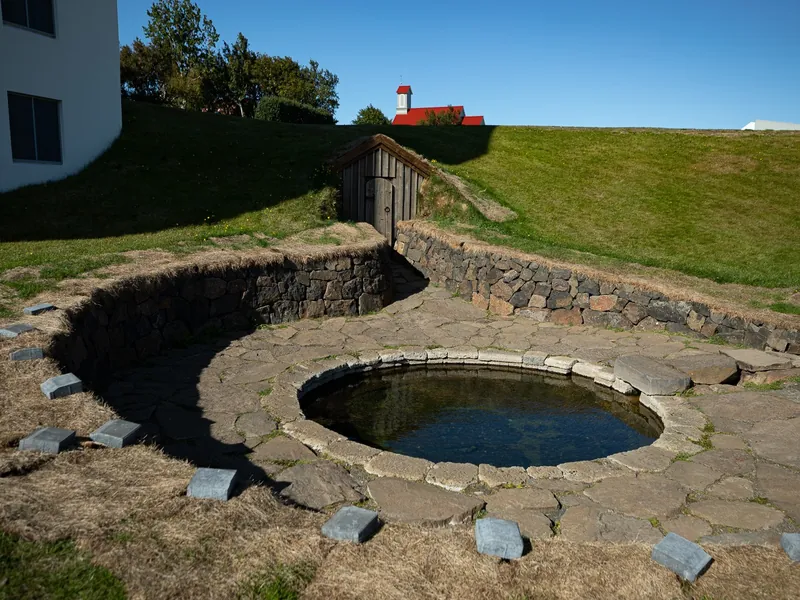
Snorri Sturluson, born in 1179, was one of the richest men in Iceland, twice its lawspeaker, and author of the Prose Edda and Heimskringla; without him there would be no Thor films. He settled at Reykholt in 1206, built a fortress from materials imported from Norway and piped a hot spring into a bath. He made himself useful to King Hákon of Norway and then let him down, while Iceland's great families fought pitched battles, one of the bloodiest at Örlygsstaðir in 1238. On 23 September 1241 Gissur Þorvaldsson reached Reykholt with seventy men; the Grapevine's short version is that two former sons-in-law did it. Snorri hid in the cellar. His last recorded words asked them not to strike. In 1262, after decades of clan warfare, Iceland swore allegiance to Norway's king, and independence returned in 1944, which the Grapevine makes 682 years. The bath, Snorralaug, is still warm. Staff would rather you did not get in.
The hard centuries 8
The Slaying of the Spaniards
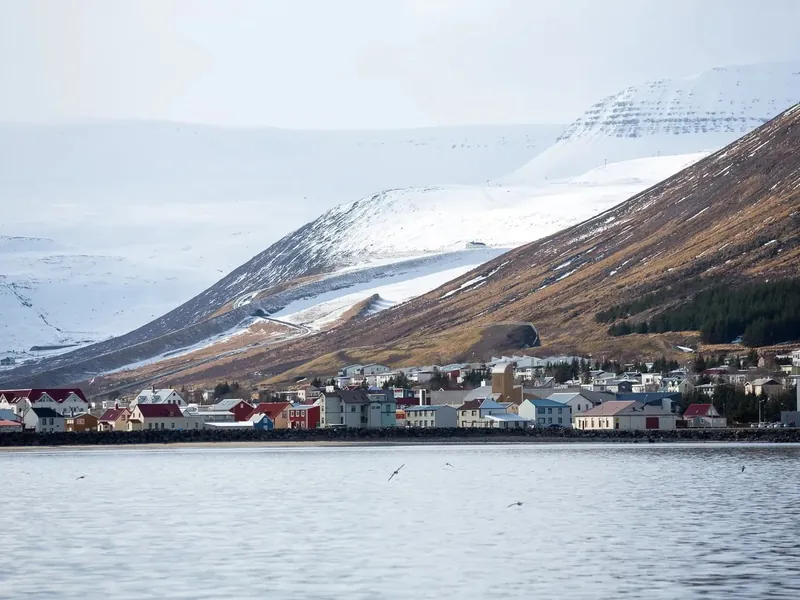
In September 1615 a gale wrecked three Basque whaling ships in Reykjarfjörður in Strandir. Some eighty men got ashore, in a year when sea ice had sat on the coast until late summer. One group helped itself to a merchant's dried fish in Þingeyri. On the night of 5 October locals killed fourteen of them in their sleep; one boy hid and lived. Sheriff Ari Magnússon of Ögur then had twelve judges declare every Basque an outlaw, and on 13 October eighteen more were killed. Thirty-two dead, Iceland's last documented massacre, among people who had traded together long enough to invent a Basque-Icelandic pidgin. The decree stood until 22 April 2015, when the district commissioner repealed it at a ceremony in Hólmavík and announced that Basques could now visit safely. A descendant of the killed shook hands with a descendant of a killer. Hólmavík has the memorial; Djúpavík has a Basque Centre with a half-built Basque boat.
The Turkish Abductions
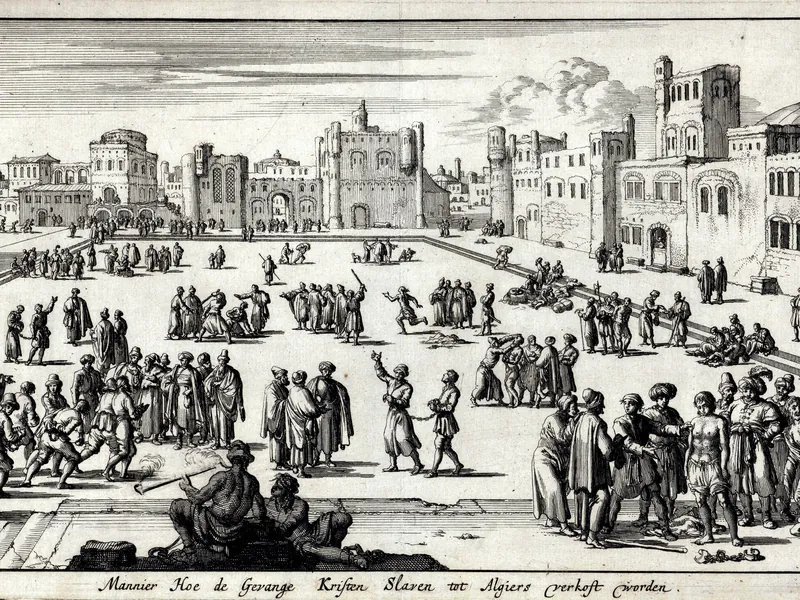
The Turks were not Turks. In 1627 the word covered any Muslim, and the corsairs who reached Iceland sailed from Algiers under a Dutchman, Murat Reis, born Jan Janszoon of Haarlem, with English pilots showing the way. One ship took captives at Grindavík on 20 June and ran aground trying for Bessastaðir. Others raided the East Fjords, then landed on Heimaey on 16 July, killed thirty-odd islanders, burned the church and took 242. Around 400 Icelanders were carried off to the slave market in Algiers. Reverend Ólafur Egilsson was freed to beg a ransom from a Danish king who had just lost a battle and felt unable to contribute; his travel diary finds time for camels and Dutch windmills. Ten years on, 27 came home. One, Guðríður Símonardóttir, fell for the student sent to re-Christianise them, Hallgrímur Pétursson. Reykjavík's big church is named after her husband. On Heimaey the landing place is still called Ræningjatangi, the robbers' peninsula.
The Age of Burnings
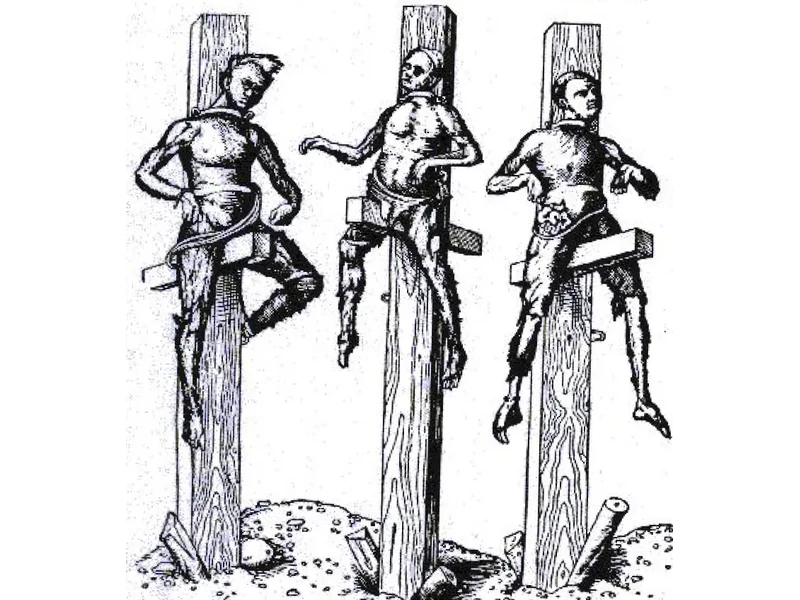
Iceland's witches were men. Elsewhere in Europe about three-quarters of those executed for witchcraft were women; here roughly nine in ten of the condemned were male, probably because magic was a bookish trade of staves and hand-copied grimoires, and men who could write were the ones caught with them. The panic began in Trékyllisvík in Strandir in 1652, when churchgoers started convulsing, belching and fainting. The new sheriff, Þorleifur Kortsson, a tailor by training, took an interest. One suspect confessed to meeting the Devil in the shape of an Arctic fox. On 21 September 1654 two men were burned alive in a seaside cleft called Kista, and a third four days later. By 1720 some 170 people had been prosecuted and 21 burned. The Museum of Icelandic Sorcery and Witchcraft in Hólmavík has the staves and the necropants, which required a living friend's consent, given before he died, plus a coin stolen from a poor widow. It also has a café.
The Danish Trade Monopoly
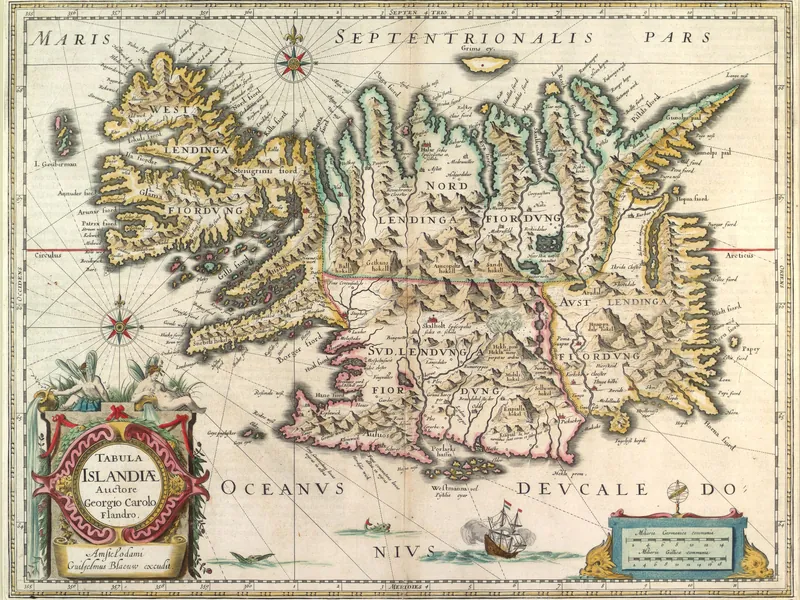
On 20 April 1602 the King of Denmark decreed that Icelanders could trade only with Danes, and only with the few Danes he had picked. For nearly two centuries Danish merchants rented twenty to twenty-five trading posts and bought and sold at prices the king fixed. Cod bought here fetched more than three times the price in Europe. What came back was often one ship a year of shoddy goods and food already on the turn. The Grapevine's summary: Denmark "got fat and sassy" while Iceland hung on. Skúli Magnússon, the first Icelander to serve as fógeti, pushed back; merchants were told to live here and allowed to invest in something other than trade. The Laki eruption of 1783 finished off the business case, and the monopoly ended on New Year's Eve 1787. Trade with the rest of the world had to wait until 1855. Skúli's statue stands in Fógetagarður, an old graveyard off Aðalstræti with two bars.
Laki and the Haze Famine
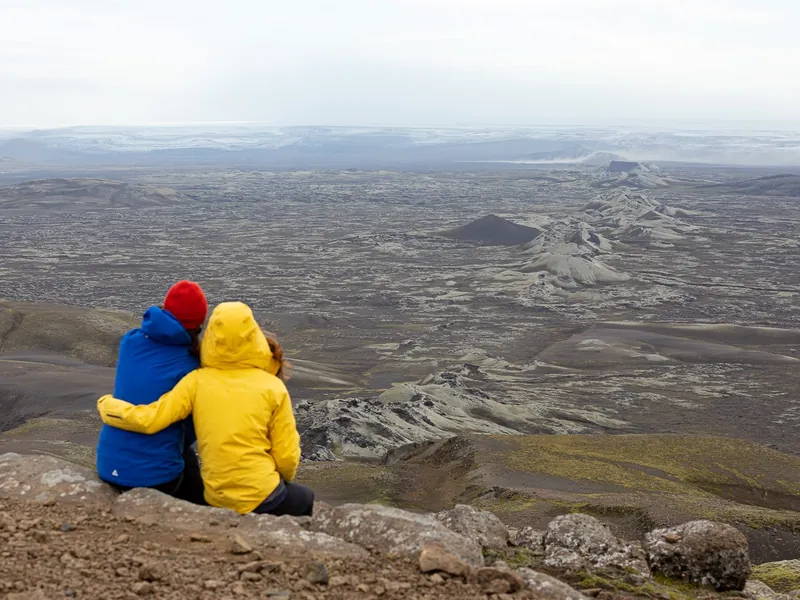
On 8 June 1783 the highlands near Kirkjubæjarklaustur split along 25 kilometres, and the Lakagígar craters poured out lava for eight months. The lava took a dozen farms. The haze did the rest: poisoned ash settled on the grass, and up to three-quarters of the sheep died, with 40 percent of the cows and nearly half the horses. Famine and smallpox followed; 49,000 Icelanders were 39,000 by 1786. News reached Copenhagen in September, the relief ship missed the sailing season and arrived in April 1784, and moving everyone to Jutland was discussed. On 20 July 1783 Reverend Jón Steingrímsson preached his fire mass as lava neared the church. It stopped, though the Grapevine notes a river in the way may have helped. Abroad the haze is blamed for some 23,000 deaths in Britain and famine in Egypt and Japan. The lava is now carpeted in moss, and in summer a 4WD road runs from Kirkjubæjarklaustur to the craters.
The Dog-Days King
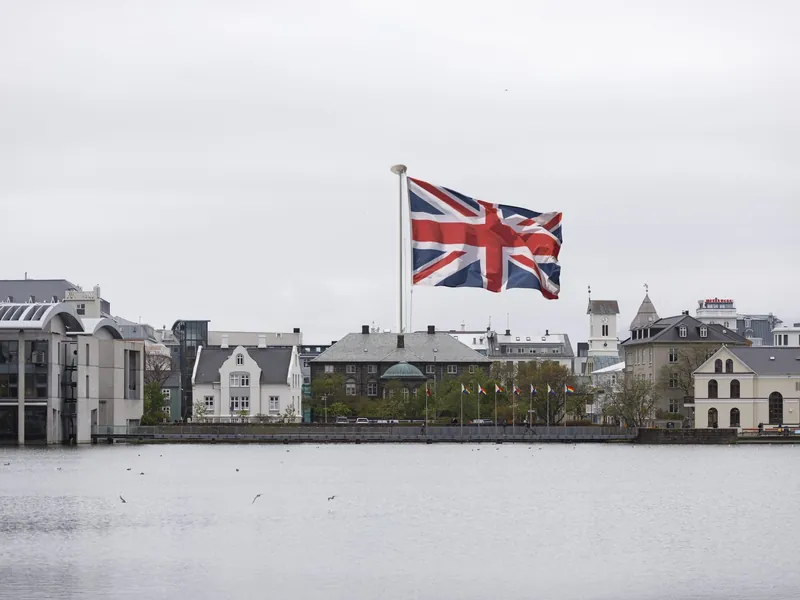
In the summer of 1809 a Danish watchmaker's son, working as interpreter for an English soap merchant, overthrew the government of Iceland. Jørgen Jørgensen and Samuel Phelps had come to swap food and tobacco for tallow; the governor, Count Trampe, refused, since Icelanders were forbidden to trade with foreigners, famine or not. On 25 June Trampe was arrested and locked in a ship. Jørgensen declared Iceland independent with himself as Protector, promised elections with a vote for everyone, raised a blue flag with three codfish on it, and recruited an army of about twelve, some freed from the jail, which became their barracks. He was hosting a ball when the Royal Navy arrived two months later and handed the country back to Denmark. He died in Tasmania in 1841, an ex-convict and police constable still styled King of Iceland. Icelanders call him Jörundur hundadagakonungur, the Dog-Days King. In 2011 the Grapevine noted that he still has no statue.
The Last Execution
On 12 January 1830, at Þrístapar in the north, the servant Agnes Magnúsdóttir and the farmer's son Friðrik Sigurðsson were beheaded for the murder of two men at the farm Illugastaðir, which was then set alight. Convicts were normally shipped to Denmark for this; doing it at home was judged more economical. Iceland had seen no execution since 1790, so the axe and block were ordered from Copenhagen, and the timber for the railing was borrowed and returned afterwards. Every farmer in the district was ordered to attend; about 150 people watched. They were the last of 248 known executions since 1550, and the Grapevine's tally of the rest is bleak: mostly vagrants, farmhands and poor women, 76 of them hanged for theft. Hannah Kent's novel 'Burial Rites' made Agnes a martyr; the Grapevine's reviewer wondered whether that was any fairer than a monster. The axe blade is in the National Museum. Nobody has needed it since.
The Last Great Auks
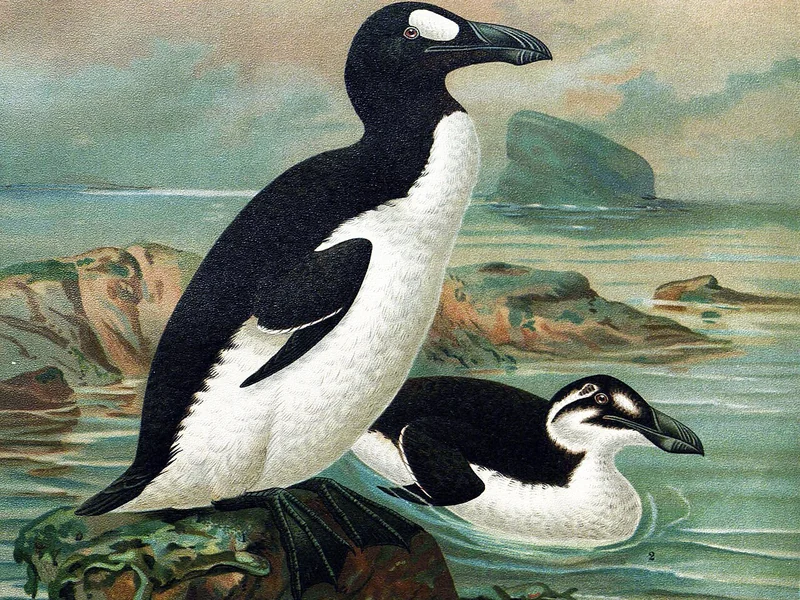
The great auk, geirfugl to Icelanders, was a large flightless seabird that swam beautifully and walked, by the Grapevine's comparison, like a drunk in downtown Reykjavík at the weekend. It had no fear of people, and people took its feathers, eggs and meat for centuries. When an eruption sank the skerry Geirfuglasker in 1830, the survivors moved to Eldey, off Reykjanes, where about fifty were counted in 1835. Museums noticed the bird was getting rare and started paying for skins. In the summer of 1844 Jón Brandsson, Sigurður Ísleifsson and Ketill Ketilsson went out on commission from a Danish collector and killed the last breeding pair; the egg crushed under Ketill's boot may be a later embellishment. Nobody knew they were the last. Iceland has felt guilty since, and in 1971 raised 21,600 dollars for a stuffed one, then the most expensive stuffed bird ever sold. A great auk sculpture stands near Reykjanesviti lighthouse, looking out to sea.
Becoming a nation 5
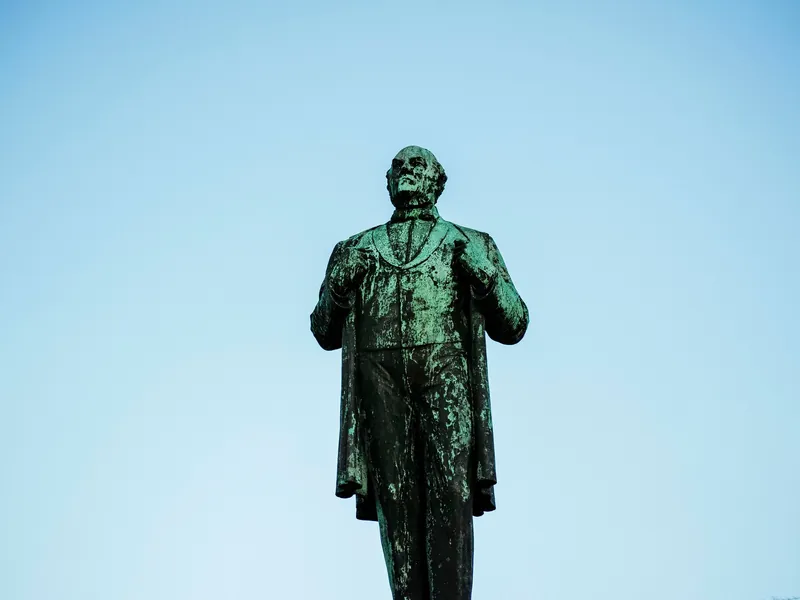
The Most Polite Revolution
Iceland's independence hero never lifted a sword. Jón Sigurðsson, born in the Westfjords on 17 June 1811, was a philologist in Copenhagen who wore the Danes down with legal argument. His most dramatic moment came in 1851, when he and his followers shouted 'We all protest' at a Danish proposal and left the room. The Grapevine calls him possibly the most polite revolutionary in history: never arrested, nobody beheaded. A constitution came in 1874, home rule thirty years later, sovereignty under the Danish crown on 1 December 1918. On Jón's birthday in 1944, after 97.4 percent voted for it, the republic was declared at Þingvellir in pouring rain. Only a third of the flags were ready, the liquor stores had been shut without warning, and the first president signed an oath that still shows the weather. Jón's statue has faced Alþingi across Austurvöllur since 1931. Tradition holds that it has rained on 17 June ever since.
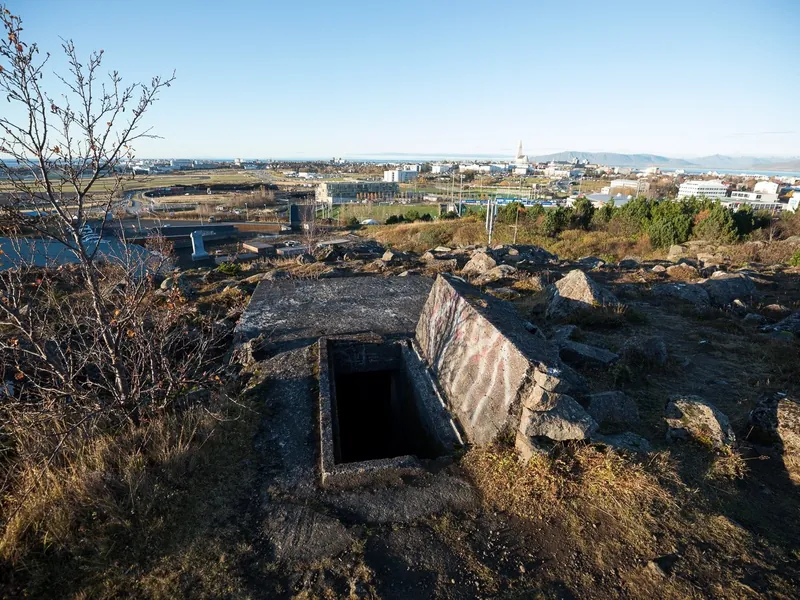
The Good Old War
On 10 May 1940 British troops landed in Reykjavík uninvited. The damage included the door of the state telephone company, which they agreed to pay for. That evening Prime Minister Hermann Jónasson asked the public by radio to treat the soldiers as guests. They came to number 25,000; the Americans who took over on 7 July 1941 peaked at 60,000. Unemployment vanished into 'Bretavinna', Brit work; for years it was 'blessað stríðið', the good old war. 'Ástandið', the Situation, was local women preferring the guests. A committee of three men produced a police list of over 500 suspects aged 12 to 61; two institutions for the 'corrupted' opened in 1942 and closed in 1943. By the end 332 women had married soldiers. Pillboxes and bunkers still sit in the trees west of Perlan on Öskjuhlíð; Hvalfjörður has naval-base ruins and the War and Peace Museum. Most visitors arrive by way of the war: the Americans built Keflavík airport.
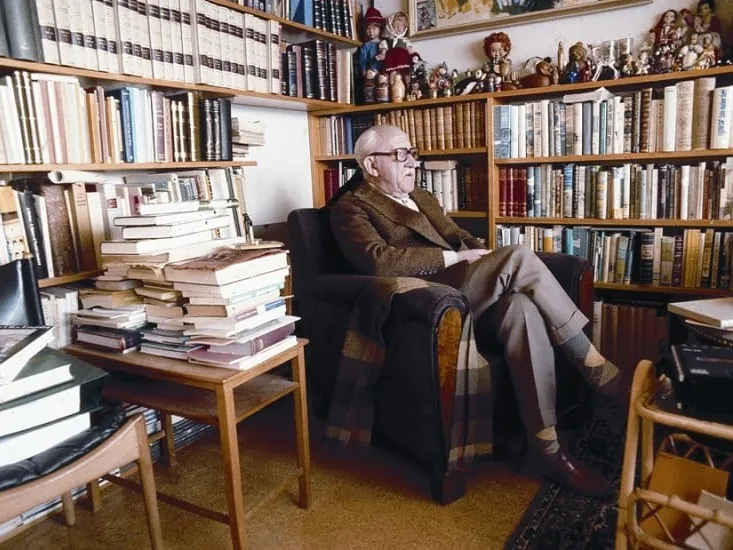
Laxness and the Nobel Prize
Long before Björk, the Grapevine points out, Iceland's pop star was a novelist. Halldór Guðjónsson, born in 1902, took his pen name from the family farm at Laxnes, published his first novel at 17 and tried his luck as a Hollywood screenwriter in the late 1920s. Independent People, more than 500 pages about a sheep farmer too stubborn to be its hero, sits half-read on many a nightstand; The Atom Station, his jab at the Keflavík base deal, sold out the day it appeared, 21 March 1948. In 1955 he became Iceland's only Nobel laureate, cited by the Swedish Academy for his "vivid epic power". In Stockholm telegrams arrived from royalty and banks; that evening he answered exactly one, from the Sundsvall Society of Pipe-Layers. Gljúfrasteinn, the house he built in 1945 on the road to Þingvellir, is now a museum, the study left as it was, down to the desk he stood at to write.
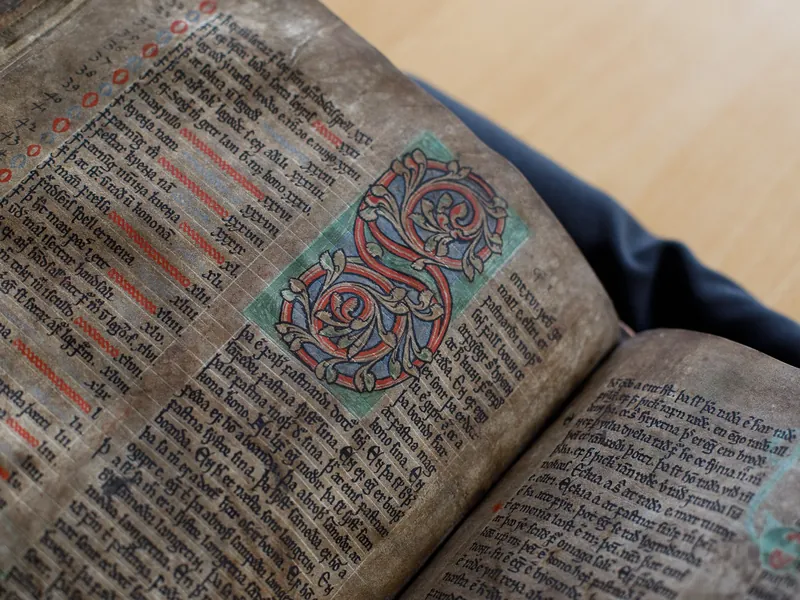
The Manuscripts Come Home
Iceland's oldest standing buildings date from the eighteenth century, so its cathedrals are books: vellum manuscripts holding the sagas and nearly everything known about the Norse gods. By Árni Magnússon's day the old skins were being thrown out, reused as book covers and, in one case, turned into a sieve. Árni, a professor in Copenhagen, collected every scrap, and on his death in 1730 left the lot to the university there. Iceland started asking for it back in the 1830s. Denmark's parliament agreed in 1965, and on 21 April 1971 the first two books reached Reykjavík by ship under military escort, because nobody trusted an aeroplane: the Codex Regius, sole source for most of the Poetic Edda, and Flateyjarbók, the largest. By 1997, 1,666 manuscripts were home. About twenty at a time are shown at Edda, a building approved in 2005 and opened in 2023. For years the site was known as the hole of Icelandic studies.
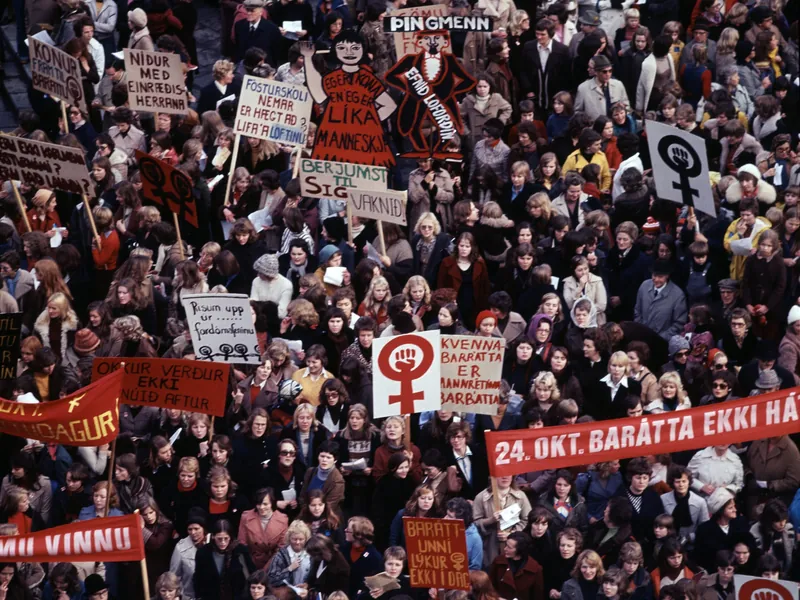
The Day Women Stopped
On 19 June 1915 King Christian X confirmed the vote for Icelandic women, provided they were 40 or older; the age limit went in 1920, and the first woman MP, Ingibjörg H. Bjarnason, was elected in 1922. Then progress idled. By 1975 only nine women had ever sat in Alþingi, three of them at the time. So on 24 October 1975, 90 percent of Icelandic women stopped work, at the office and at home. It was called a 'day off' because the more cautious organisers feared 'strike' would put people off. About 25,000 filled downtown Reykjavík, in a country of 216,000. One was a theatre director and single mother, Vigdís Finnbogadóttir, who told her staff she was going. In 1980 she won the presidency by 33.8 percent to 32.3, the world's first democratically elected female president, and stayed until 1996. Ingibjörg's statue stands outside Alþingi. The walkout has been repeated several times; in 2023, 100,000 people came.
Cold War, warm island 4
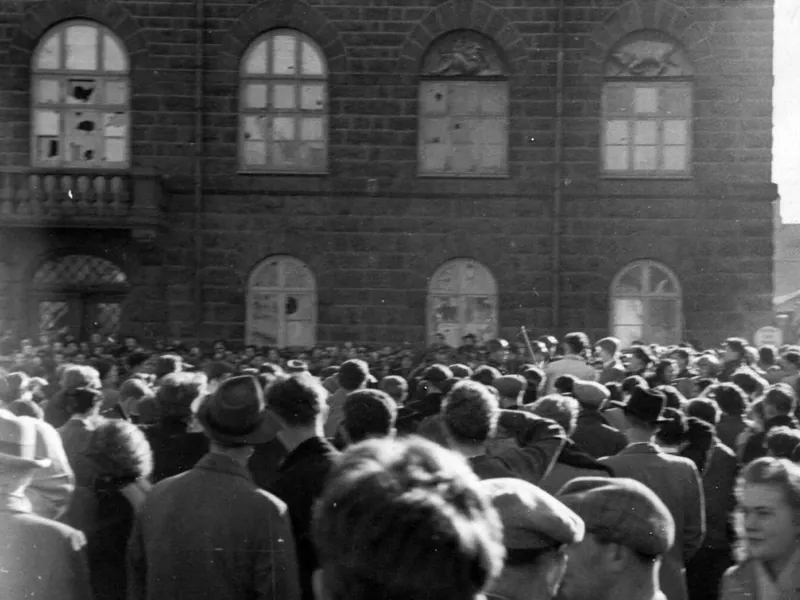
Tear Gas on Austurvöllur
Iceland has no army and, until 30 March 1949, had never used tear gas either. That day the Alþingi voted on joining NATO, a cause driven by Foreign Minister Bjarni Benediktsson, a staunch anti-communist and great-uncle of the more recent minister of the same name and party; the Grapevine invites you to draw your own conclusions. Several hundred protesters marched on Austurvöllur, where pro-NATO counter-protesters already stood between them and parliament. It stayed calm until a leading socialist announced that his party chairman was being held hostage inside. Then came rocks, eggs and breaking windows, one stone narrowly missing the parliamentary president's head. Police and Independence Party volunteers beat the crowd back and fired tear gas, not seen again in Iceland until 2009. The vote passed anyway. Austurvöllur, under the statue of Jón Sigurðsson, is still where Icelanders go to shout at parliament. Russia, the Grapevine observes, has yet to annex Iceland.
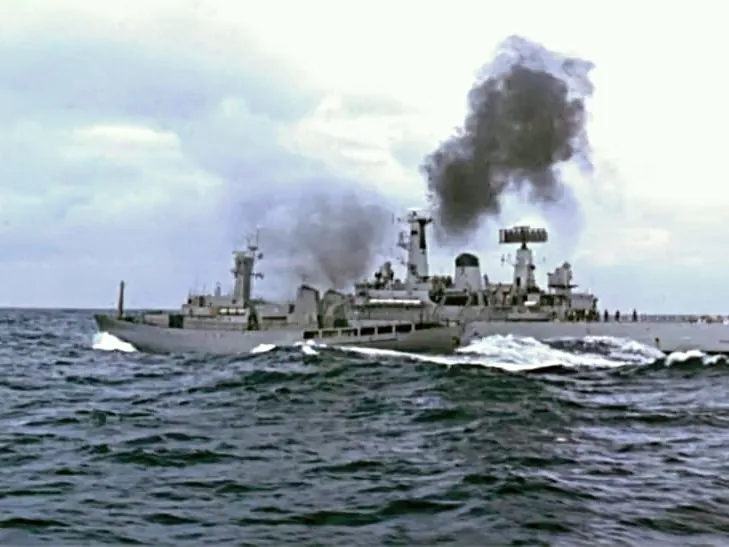
The Cod Wars
Three times between 1958 and 1976 Iceland pushed out its fishing limit, from 4 nautical miles to 12, then 50, then 200, and three times Britain sent the Royal Navy to disagree. Iceland's answer was the net cutter, an anchor-like hook towed behind a Coast Guard ship to snap trawl wires. It was first dropped on 5 September 1972 behind a trawler whose master refused to name his ship and played Rule Britannia over the radio; his crew replied with coal, rubbish and a fire axe. Rammings and warning shots followed; in February 1976 Iceland broke off diplomatic relations. What settled it was a threat to close the NATO base at Keflavík. Britain accepted the 200 miles that June and in 2012 sent 2,500 fishermen an apology and £1,000 each. The Grapevine's British writer counted three wars, three defeats and fish on his nation's face. Óðinn, a veteran of all three, can be boarded on a seasonal guided tour at the Reykjavík Maritime Museum.
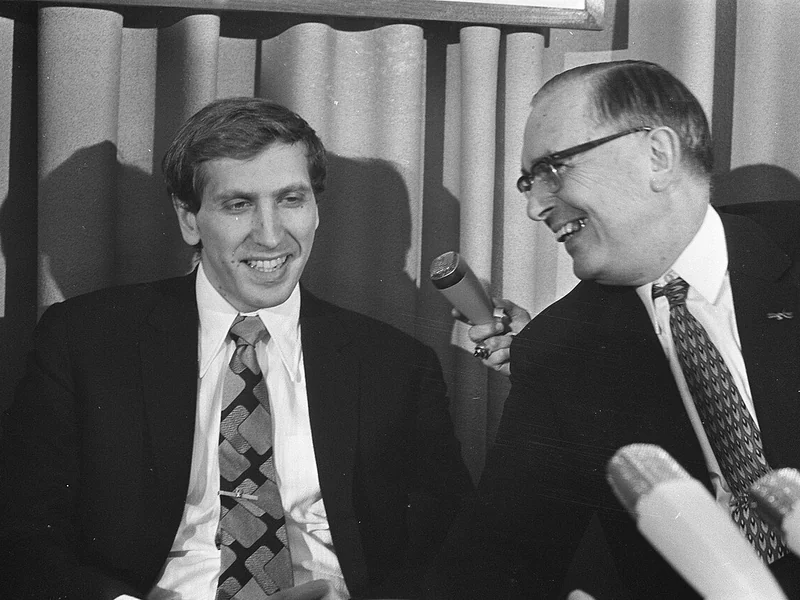
The Match of the Century
In the summer of 1972 the Cold War was fought in Laugardalshöll, a Reykjavík sports hall finished in 1965 where Led Zeppelin had played two years before. Bobby Fischer missed the opening ceremony, came only after the prize fund was doubled and Henry Kissinger phoned, lost the first game, forfeited the second over the television cameras and had the third moved to a back room. He then beat Boris Spassky 12½ to 8½. The Soviets alleged chemicals and electronic devices; Icelandic police swept the hall, inconclusively. Each superpower thought the result would prove something, and time, the Grapevine notes, proved them both wrong. Fischer's later years were uglier, and the paper does not spare his anti-Semitism. With his American passport revoked, the Alþingi voted him citizenship in 2005. He died in Reykjavík in 2008 and lies in the small churchyard at Laugardælir outside Selfoss, where Spassky, visiting, said he would like to be buried too.
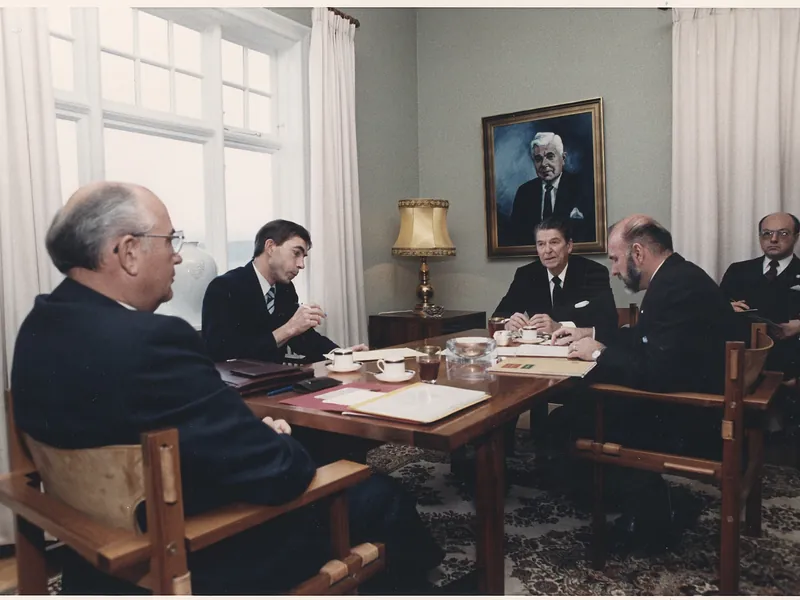
The Ghost House Summit
Höfði is a white wooden house ordered from a Norwegian catalogue in 1909 by the French consul and delivered ready to assemble. The poet and judge Einar Benediktsson owned it and said the ghost of a woman, Sólborg Jónsdóttir, came to him at night. A British consul wrote so many letters about a white lady and bumps in the night that the house was sold. On 11–12 October 1986 Reagan and Gorbachev sat inside and came within one word, "laboratory", of agreeing to scrap every nuclear weapon in ten years. With nothing to report, the world's cameras filmed the doorknob. The talks collapsed; the treaty they made possible was signed in Washington in 1987. A taxi driver, asked if he was disappointed, said yes, he had hoped for more fares. Höfði still stands on the Reykjavík waterfront just off Borgartún, under the Höfðatorg glass tower. Neither leader reported seeing the ghost, and nobody has said where she went.
Modern times 5
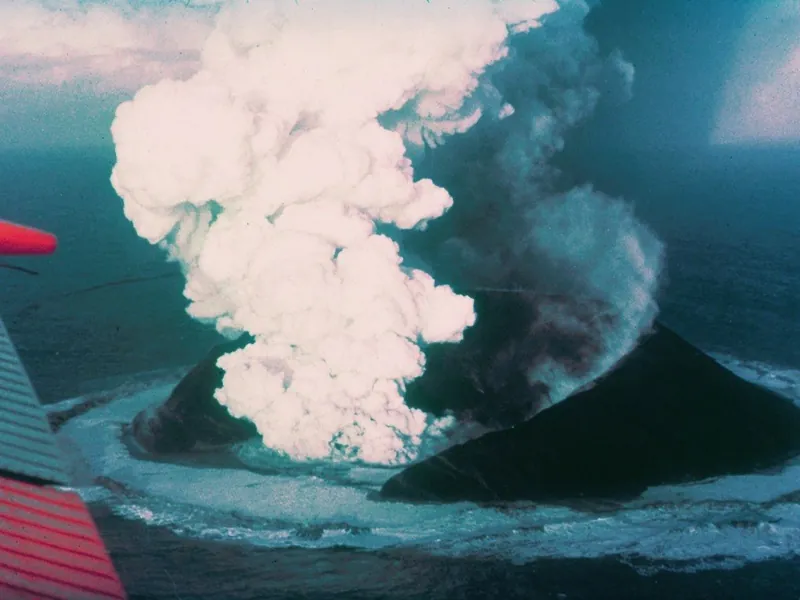
Surtsey and the Heimaey Eruption
On 14 November 1963 a Westman Islands fishing crew saw smoke rising from the sea; by June 1967, when it stopped, Iceland had a new island, Surtsey. Only scientists may land. Boys once planted potatoes there, and a careless toilet stop produced a tomato plant; both crops were destroyed. Nine years on, the fire came ashore. Just before 2 am on 23 January 1973 a fissure opened a kilometre from Heimaey's town centre. A storm had kept the fishing fleet in harbour, so the first boat left by 2:30 and within hours nearly all 5,000-odd residents were on the mainland. Around 400 homes were lost. Crews pumped sea water onto the lava for months while critics called it futile; the flow stopped short of the harbour mouth and left better shelter than before. Eldheimar museum stands around a house dug out after forty years under ash. Eldfell, above it, was still warm when the Grapevine last climbed it.
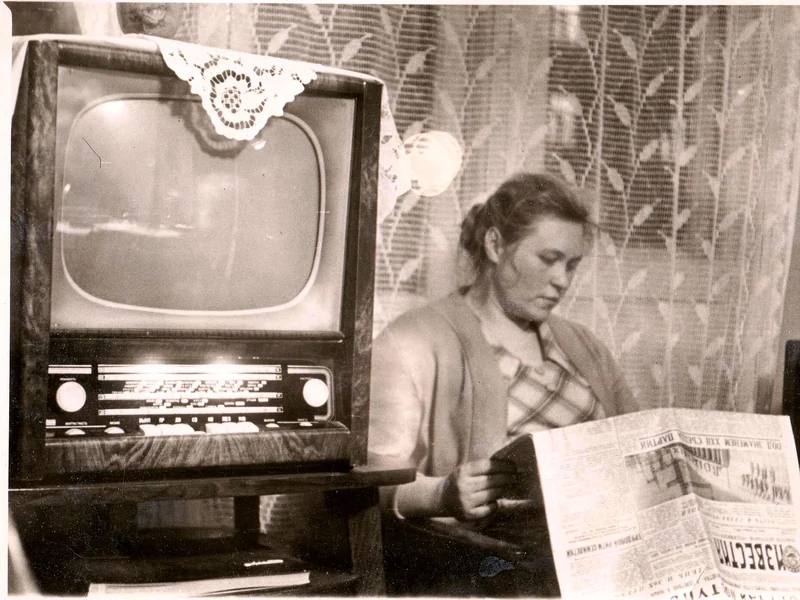
No TV On Thursdays
Twentieth-century Iceland liked banning things, and beer was only the famous case. State television went on air on 30 September 1966 and took Thursdays off until 1 October 1987 and the whole of July off until 1983; a filmmaker who grew up with it told the Grapevine it was a holiday for the staff. Driving on the right was agreed in 1940, then the British army arrived driving on the left, so the switch waited until 6:00 on 26 May 1968, H-day. Overnight 1,662 road signs were changed, and the only reported injury was a boy on a bicycle. Reykjavík banned dogs in 1924, which the Grapevine calls a kindness to cats and postmen. In the 1980s an MP, the former footballer Albert Guðmundsson, had exceptions written into the law because his sons wanted one, and a 1988 referendum still kept the ban. Look around downtown: the cats never gave the city back.
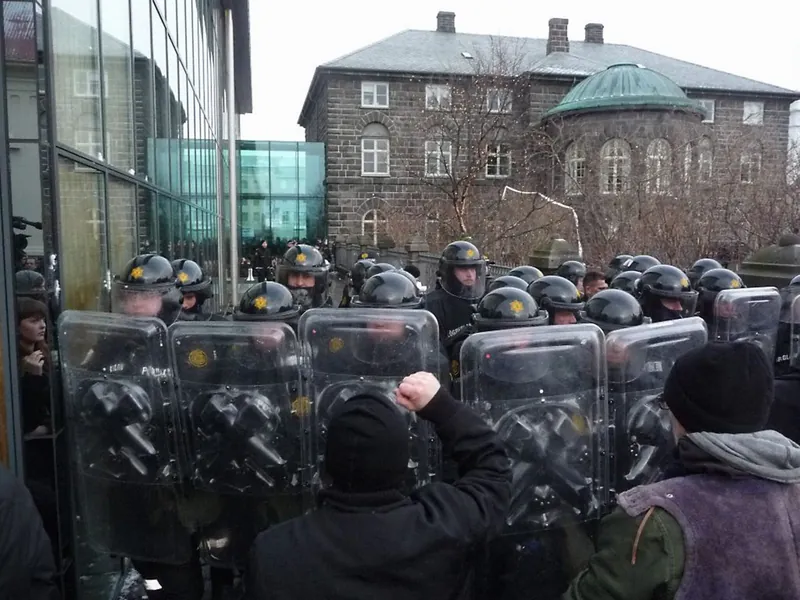
The Pots and Pans Revolution
On 6 October 2008 Prime Minister Geir H. Haarde addressed the nation about the banks on television and signed off with "God bless Iceland". By 9 October Glitnir, Landsbanki and Kaupþing were all in state hands, and Britain had reached for anti-terrorism law to freeze Icelandic assets. Saturday protests began on 11 October on Austurvöllur, the square in front of parliament. The Grapevine argues that what really filled the lawn was an MP whose first order of business after the crash was a proposal to sell alcohol in shops. On 8 November a young anarchist, Haukur Hilmarsson, climbed onto the roof of parliament and ran up the flag of the Bónus discount supermarket. On 20 January 2009 thousands came back with pots and pans; the following night police used tear gas for the first time since 1949; on 26 January the government resigned. Iceland's first left-wing government followed. It lasted one term.
The Volcano Nobody Could Pronounce
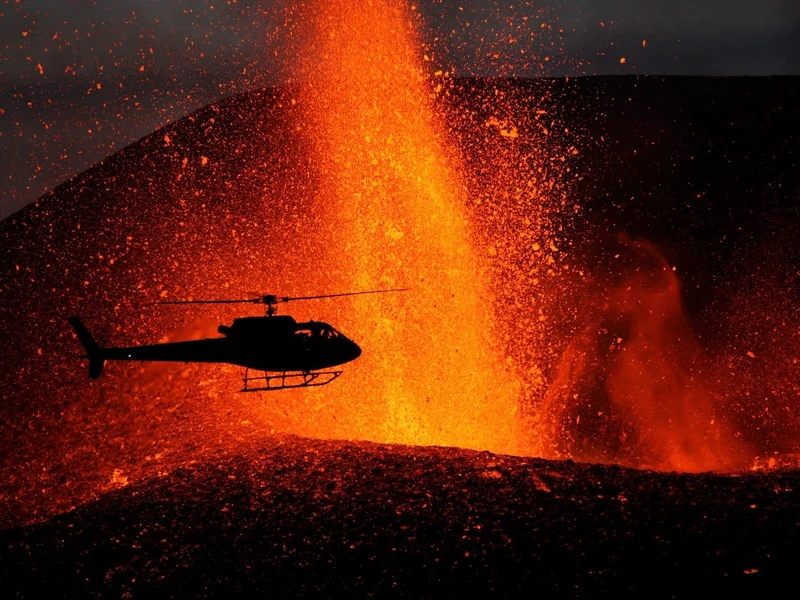
On 14 April 2010 a volcano in south Iceland began erupting through the ice cap on top of it. Meltwater shattered the lava into fine glassy ash, the plume climbed about nine kilometres into an unusually steady jet stream, and the jet stream was pointed at Europe. Some twenty countries closed their airspace, around ten million travellers were stuck, and newsreaders were handed the word Eyjafjallajökull without warning. A drunk Scottish man bellowing that he hated Iceland behind a live news anchor became a meme. The Grapevine's position, a year on, was that Europe should get over it already. Iceland did better than that. Visitor numbers had only dipped slightly after the banking crash, to around 460,000; in 2011 they passed half a million and kept climbing, and every petrol station in the south sold vials of ash. Þorvaldseyri, the farm under the plume in the famous photograph, sits beside the Ring Road, 140 km east of Reykjavík.
The Night Iceland Beat England
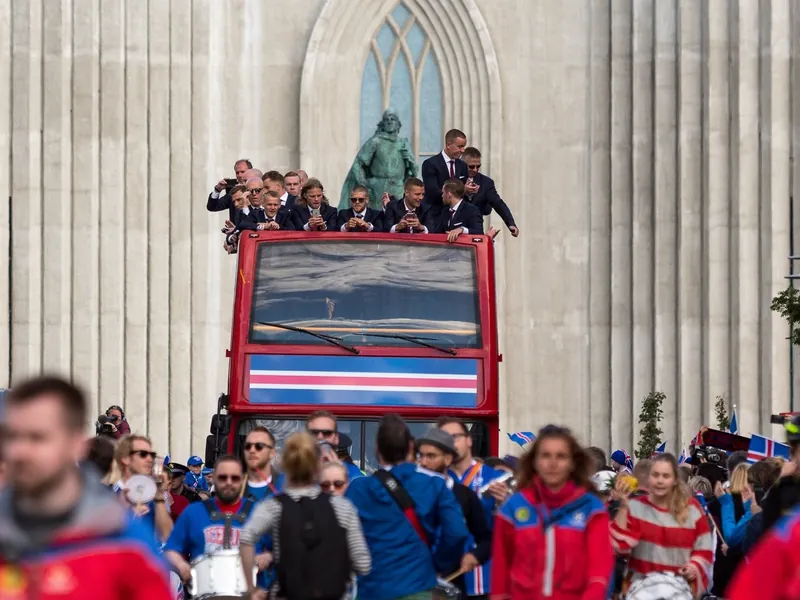
In June 2016 Iceland, population about 330,000, became the smallest nation ever to play at a European Championship. Fans had applied for 26,985 tickets, enough to seat 8 per cent of the country. The team drew 1–1 with Portugal, leaving Cristiano Ronaldo near tears, beat Austria in the 94th minute while commentator Guðmundur Benediktsson shrieked himself into a viral video, and on 27 June met England in Nice. Rooney scored a penalty in the 4th minute. Ragnar Sigurðsson equalised in the 6th from a long throw and Kolbeinn Sigþórsson scored in the 18th. It finished 2–1. The Grapevine, which had billed the match as Brexit 2, noted a nation the size of Dudley outsinging England. France won the quarter-final 5–2. On 4 July about 30,000 people, a tenth of the country, met the team at Arnarhóll, the hill in downtown Reykjavík, for one more Viking clap. The clap seems to have been borrowed from the Scottish club Motherwell.